In a previous post, I described my search for my great-grandfather’s brother Conrad August Weil. I have recently returned from my brief research trip to Pittsburgh, and I wanted to share some exciting findings!
When I went to Pittsburgh, one of my primary goals was to find out of the Conrad Weil who married Evelyn Simon was the same Conrad Weil Jr. from my family. The short answer is, yes, he is! My next question was, where did he go after that? (I still don’t know!) Continue reading “Where is Conrad August? (an update)”→
In celebration of my 50th blog post, and to commemorate the 100th anniversary of World War I, I have a very special announcement! In a previous post, I introduced my great-grandfather Glenn Kaiser, who served in the American Army during World War I. During 1918-1919, he was stationed in France and Germany along the front lines. Like many soldiers at the front, he sent frequent letters home to his family. I am currently scanning and transcribing some of the surviving letters that he sent home during his time abroad. I’ll be sharing these letters on a special section on my blog, starting today! The first batch of letters include some of his letters from training before he was sent overseas.
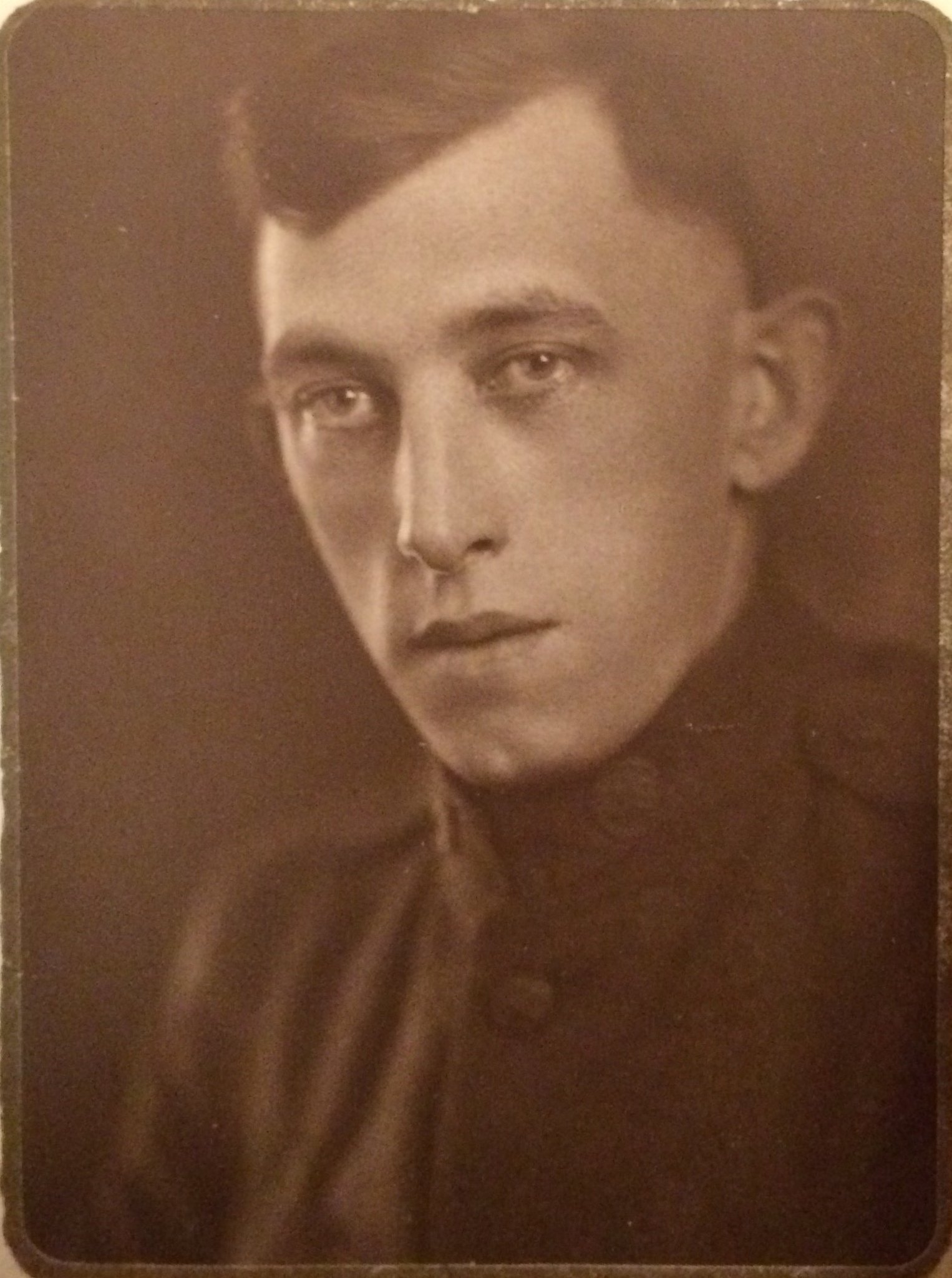
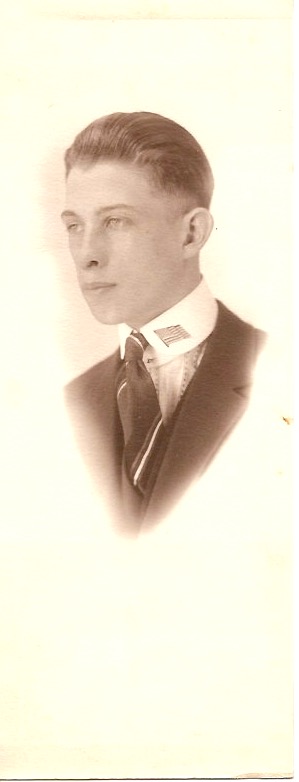
Floyd Kaiser, about 1917. This may be his high school photo. (Image Source: Kaiser Family Photos)
My great-great-grandparents, Andrew Kaiser and Jennie Holbrook, had a large, blended family. Between the two of them, they had 18 children. This is the story of my great-great uncle Floyd, who was their youngest child, who also died when he was very young.
Andrew Kaiser and Jennie Holbrook were married on 22 July 1885. Both of them had been married previously, and had had children with their previous spouses. Andrew had eleven children with his previous wife, Elizabeth Wentsel. Four of these children died young, before Elizabeth’s death in 1884. Jennie had previously married Thomas Burke, and they had three children. She was granted a divorce from him in June of 1885. Although it’s not clear how Jennie and Andrew met, they lived in the same small town of Prophetstown in Whiteside County, Illinois. Thomas Burke was a druggist in town, and Andrew Kaiser was a tinner. Both businessmen may have known each other, and may have been in the same social circles. After losing their first spouses, both Andrew and Jennie found themselves as single parents, with at least several small children at home. Joining their households was likely a beneficial situation for them both. Continue reading “Floyd, the youngest Kaiser brother”→
My 3rd-great grandmother, Metta Hagenah, was one of my longest-living direct ancestors. She lived to be 95 years old, living the first third of her life in Germany, and the last two-thirds in Benton County, Missouri. This is a quick look at her life. Continue reading “The long life of Metta (Hagenah) Tietjen”→
I recently had the opportunity to record the story of my grandmother in WWII for a storytelling class. It tells the story of how my Nana, Mildred Kaiser, joined the WAVES and served in the Navy during WWII. It follows the timeline of that part of her life. Click here or click the video below to view the digital story!
Thank you to Prof. Kate McDowell and my UIUC Storytelling classmates who inspired me to share this story in a new way! I had previously written about her time in the WAVES in a three-part series.
Sources:
Personal interviews with Mildred (Kaiser) Drake by EvaAnne Weil and Emily (Drake) Weil, 1998-2015.
Photos from private collection, Mildred (Kaiser) Drake’s WAVES photo album, 1944-1946.

 The Family History Librarian