This is an excerpt of a compiled genealogy of Gustaf Medine and his descendants. The full compiled genealogy includes a longer biography of Gustaf Medine, and biographies of three generations of his descendants. See the full document on this page.
Gustaf and Lena Medine were my great-great grandparents. Gustaf emigrated from Sweden, met Lena in Germany, and then they immigrated together to the United States. They settled in DeKalb County, Illinois, where many of their descendants still live. This is a brief biography of their lives in the United States.
Gustaf Andreasson (known after 1882 as Gustaf Medine), was born 7 November 1853 at Mexarp, Mistelås parish, Kronoberg County, Sweden; died 30 June 1927 at Sycamore, DeKalb County, Illinois. He married about 1880 in Germany, Katharina (Lena) M. Schrader, daughter of Ralph Schrader. She was born 1 December 1862 in Schönberg, Holstein, Germany, and died 17 September 1940 in Sycamore.Continue reading “Bio: Gustaf and Lena Medine”→
My Papa, Ed Drake, took his civic duty very seriously. As a child, I remember that he often served as an election judge, and he felt that it was very important to vote in every single election. I would go with him or my mom when they went to vote, standing just outside the little curtain as they filled out their ballot. When I was old enough to vote myself, he encouraged me to vote in every single election, including local elections.
I later found out that Papa didn’t just serve his local community as an election judge, but he had previously served as city alderman in our small town. He was initially interested in running for Genoa City Council because he wanted to improve his community and serve with honesty and integrity. He was elected to two terms as alderman from 1979 to 1987.
In 1979, he defeated incumbent David Rood by just 12 votes. He was interested in balancing the budget for the city and fought against misuse of public funds. He served as chairman of the public works committee in 1980, and chairman of the finance committee in 1981-1984. In his bid for reelection in 1983, he said that “he would like to continue in public service because during his term he had a good record and the council stayed within the budget. ‘We reduced the general deficit by 47 percent in the last two years.’ […] His experience with city finances and his ongoing involvement in several discussions before the council make him equal or better as a candidate for alderman of the third ward.” (The Daily Chronicle, 7 Apr 1983, p. 2)
Papa ran for a third term in April 1987. In an interview, he said that “he wanted a third term in office because working on the council was challenging [and] he felt he could take it and go along with anything.” He mentioned that “he is retired and […] he will have lots of time to tend to city business.” (The Daily Chronicle, 25 Jan 1987, p. 2). He was defeated in the April 1987 election by Dale Barcus, who won by 31 votes. In an interview after the election, he stated, “he was glad to have the opportunity to serve the city and had learned a lot during his tenure as alderman.” (The Daily Chronicle, 9 Apr 1987, p. 1) While he didn’t run for public office again, he was proud of the small impact that he was able to make in our community.
“Candidate Night,” held at the Genoa Park District, on April 12, 1979. From left to right: Beverly Thompson, Robert Parrish, unknown, Robert Larson, Ray Grace, Ed Drake, David Rood (Photo from private family photo collection)
Nana and her siblings Mary, Glendora, and Ronnie in front of their house in DeKalb in 1934.
My grandma, who we affectionately call Nana, would have been 100 years old today. Her name was Mildred Agnes Kaiser, named after her mother Mildred Irene, and she was born October 25, 1923. “Millie” was the second oldest child, but she never had a chance to meet her older brother, Vernon. He passed away before she was born when he was just four months old. She grew up on Garden Street in DeKalb, IL, with her three younger siblings, Glendora, Mary, and Ronnie. She had a large extended family, and spent a lot of time with her cousins on both sides of the family.
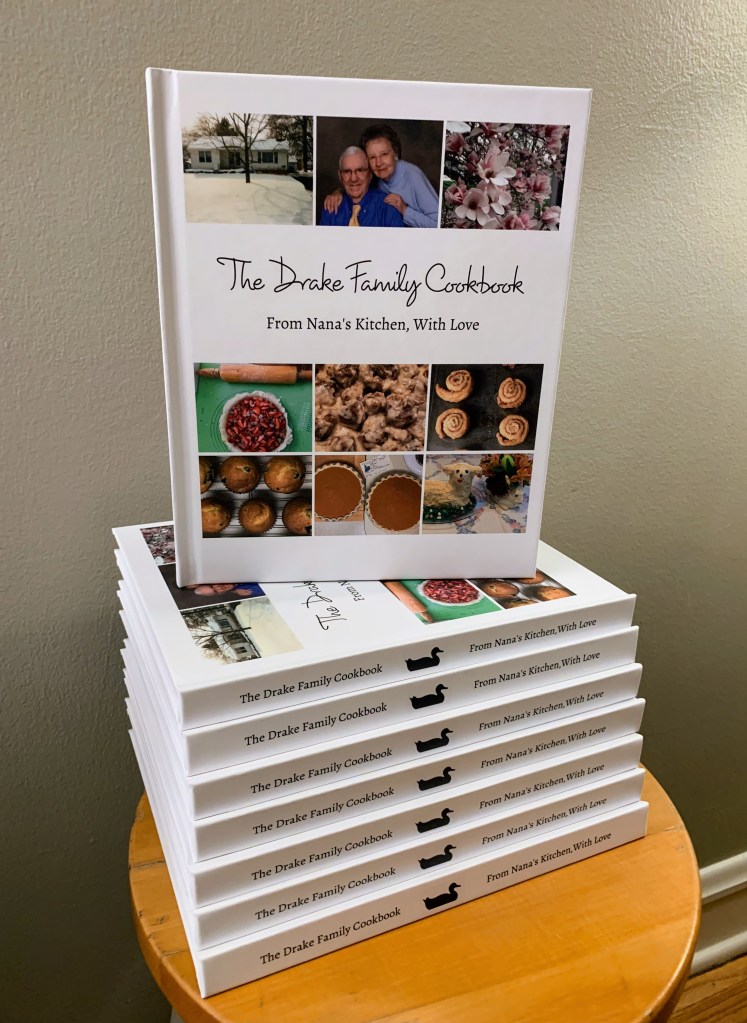
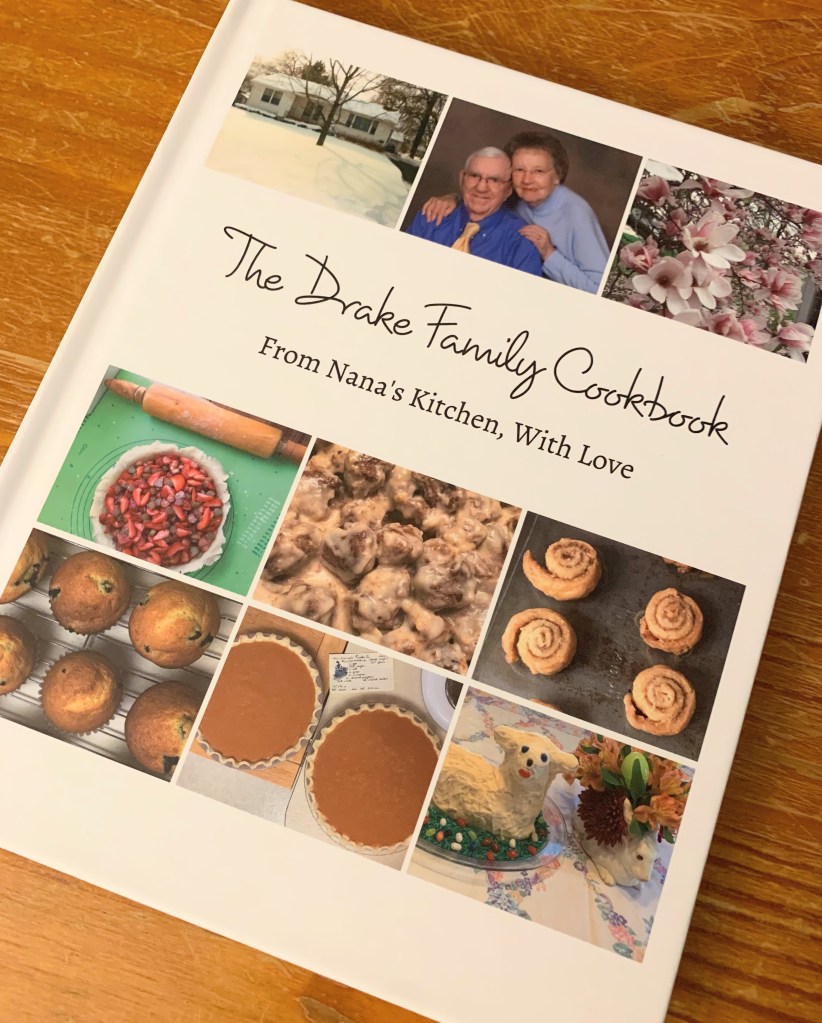
Over the past year, I’ve taken a break from blogging in order to write a cookbook for my family. In the book, I compile many of the recipes from my grandparents and write about our family’s culinary history. I’m so proud of the way the book turned out!
I wanted to write a cookbook for our family to preserve our cherished family recipes, and so everyone would have a copy of our favorite recipes. Whenever I was away at school, and wanted to make a family recipe, I’d have to call up my mom to give me the recipe. I had a few family recipes written in a blank spiral recipe book, but I enjoyed using original recipe cards that were written in my Nana’s or aunt’s handwriting. A cookbook with scanned recipe cards gave all of us access to those original recipes without having to further divide the original collections. It also gave me the opportunity to share special family stories and photos with the whole family. I’m so glad I took on this project, and I’m proud of this new family heirloom that I created!
This was a wonderfully rewarding project, and I encourage you to write a family cookbook of your own! Here’s some tips for writing your own family cookbook:
It will take a lot longer to write than you think! I recommend taking at least a year to compile and write the book. This allows you to take photos of dishes at particular holidays throughout the year as you make them, and time to allow family members to locate and contribute their recipes. I spent over two years to write the book, taking photos and collecting recipes over time, testing some of the recipes, and then taking about six months of concentrated writing and editing.
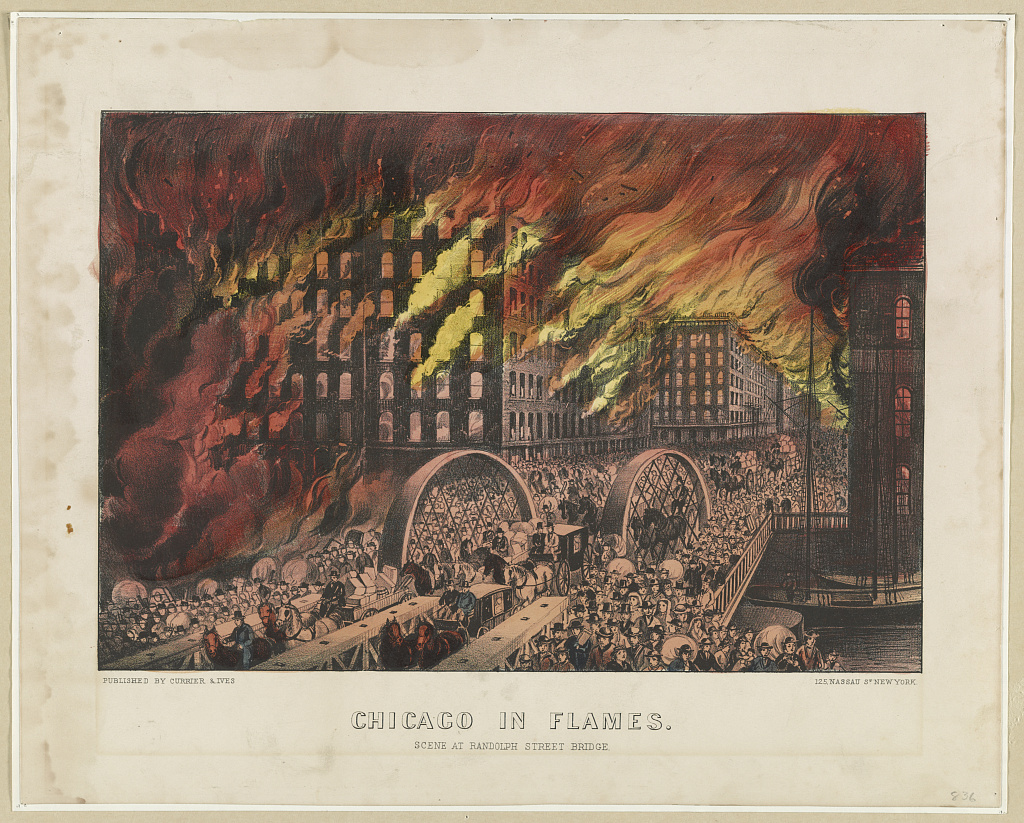
On the evening of Sunday, October 8, 1871, a fire breaks out in Chicago, just to the southwest of the city’s center. It had been a dry fall, and the fire quickly spread. Over the next 30 hours, the central area of the city burned, spreading across roughly 3.3 square miles of the city, leaving over 100,000 people (1/3 of the city) homeless, and about 300 people dead. Much of the city was left smoldering in ashes and rubble. The fire was known as The Great Chicago Fire, and today marks the 150th anniversary of the blaze.
In 1871, my 3rd great-grandfather, Johann Adolph Wilhelm Mueller, was a brickmaker in Lake View, and had owned his own brickyard for about six years. While it is a populous Chicago neighborhood now, at that time, Lake View was a rural township just north of Chicago city limits, with about 2,000 residents, and was known for its celery fields and emerging brickyards. Thomas Moulding had established the first brickyard in the township in 1863 on Southport Ave., and started using the clay along the Chicago River to make bricks. Very soon, others, mostly Germans like my 3rd great-grandfather, set up brickyards nearby. After the Great Chicago Fire, their bricks literally helped rebuild the ravaged city. This is the story of my brick-making ancestors. Continue reading “After the Fire: the Chicago Brickmakers”→


 The Family History Librarian